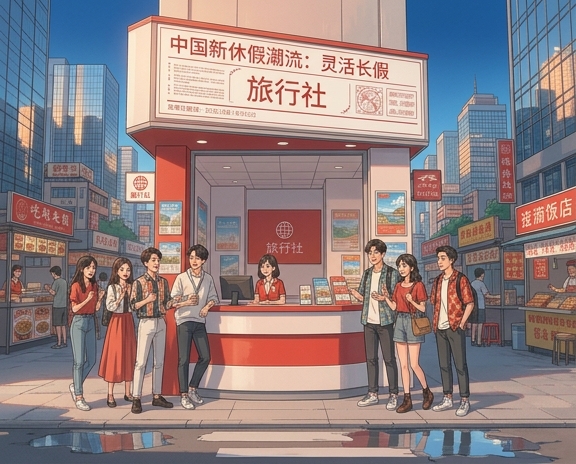
China's New Vacation Trend: Flexible Long Breaks
China's Henan Provincial Human Resources and Social Security Department has issued a notice to encourage flexible long breaks, blending holidays and weekends for a balanced travel experience.
In a recent development, the Henan Provincial Human Resources and Social Security Department in China has issued a notice that has sparked considerable interest. The notice, titled 'Guidance on Flexible Long Breaks', aims to promote a novel approach to vacationing. It suggests that employees should combine their paid annual leave with weekends, national holidays, and school vacations to create a 3-7 day flexible long break. This initiative is designed to effectively disperse peak travel periods and ease the strain on transportation systems during holidays.
The concept of blending holidays and weekends is not new in China, but the government's endorsement of this approach is a significant step. It reflects the growing trend of work-life balance and the desire for more leisure time among Chinese workers. This flexible long break can be particularly beneficial for families, allowing them to plan longer trips without the hassle of peak travel seasons.
In China, the summer vacation is a particularly popular time for travel. With schools on break, families often embark on trips to scenic spots, beaches, or even international destinations. However, this also leads to heavy traffic and crowded tourist spots. The new initiative aims to spread out the travel rush, making it easier for everyone to enjoy their time off.
The notice also encourages companies to optimize their summer work schedules. For instance, some companies might adopt a flexible work schedule on Fridays, allowing employees to leave work early on Fridays and enjoy a long weekend. This could be combined with a short vacation to create a 'Friday Half-Day + Weekend + Annual Leave' short-term vacation model.
This approach is not only beneficial for employees but also for the tourism industry. By spreading out the travel season, tourist destinations can experience more consistent visitor numbers, which can be better managed and enjoyed by both tourists and locals.
In terms of cultural context, this initiative aligns with the Chinese tradition of valuing family and education. Families often use these extended breaks to travel and bond, while also exposing their children to new experiences and cultures. This is particularly important in a country where education is highly valued, and parents often look for opportunities to enrich their children's lives outside the classroom.
The new vacation policy also reflects the growing importance of technology in modern Chinese life. With the rise of online travel agencies and mobile apps, it has become easier than ever for people to plan and book their trips. This policy is likely to further boost the use of these technologies, as employees look for convenient ways to book their flexible long breaks.
In conclusion, the Henan Provincial Human Resources and Social Security Department's initiative to promote flexible long breaks is a positive step towards enhancing work-life balance in China. It reflects the country's evolving approach to leisure and travel, and its commitment to creating a more balanced and enjoyable lifestyle for its citizens.