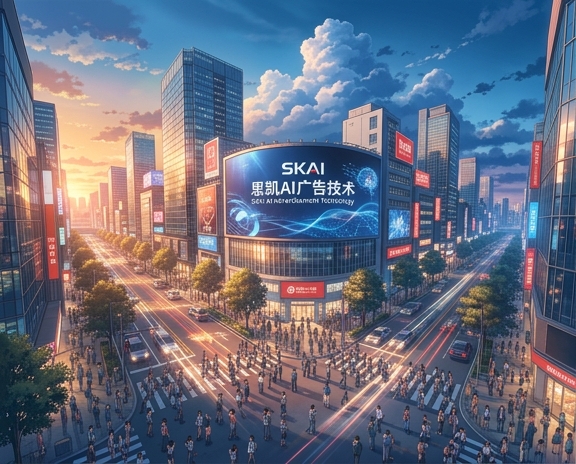
SKAI's AI Leap: Transforming Luxury Advertising with Tech
SKAI, a tech startup, has seen a 106% revenue surge by leveraging physical AI in luxury advertising, pushing the boundaries of 3D rendering and digital twins.
In the bustling tech scene of China, a startup named SKAI has made waves with a remarkable 106% increase in revenue. This surge is attributed to their innovative use of physical AI in the realm of luxury advertising. SKAI, which initially made its mark with 3D rendering and digital twin services for high-end brands and commercial visual advertisements, has garnered attention for its precision and quality. This is particularly significant in the luxury sector, where brands demand the highest level of product rendering accuracy with minimal room for error. This high standard has allowed SKAI to accumulate a robust set of capabilities in 3D scene construction, material generation, lighting simulation, camera simulation, digital twins, and rendering pipelines.
The company's journey began by winning the LVMH Innovation Award, a prestigious honor in the luxury industry. This recognition is akin to the Oscars in the film industry, highlighting the innovative spirit and high standards of the luxury sector. SKAI's work with luxury brands reflects the meticulous attention to detail and sophisticated aesthetics that are hallmarks of the luxury market, much like the meticulous attention to detail in high-end fashion shows or the opulent interiors of luxury hotels.
As the competition in the application layer of generative AI intensified, SKAI shifted its focus to a more industrial direction: physical AI data generation. This move signifies a shift from creating visually stunning advertisements for consumers to generating data for machine learning models. This data includes materials, lighting, camera parameters, RGB and depth information, object poses, annotations, and digital twin environments, all of which are crucial for training and validating robot perception models.
The concept of digital twins, a key component of SKAI's work, refers to a virtual representation of a physical entity or system. In the context of luxury goods, this could mean creating a virtual version of a high-end watch or a piece of jewelry, allowing for detailed analysis and design without the need for physical prototypes. This technology is not only innovative but also sustainable, as it reduces the need for physical materials and resources.
SKAI's transition to physical AI data generation is a testament to the evolving role of technology in the luxury industry. It reflects a broader trend in China, where technology is increasingly being integrated into various aspects of daily life. From the sleek, high-tech subway systems in major cities like Shanghai and Beijing to the cutting-edge e-commerce platforms that have revolutionized shopping habits, technology is at the forefront of China's modern identity.
The rise of SKAI also highlights the importance of innovation and technological advancement in the global market. As China continues to be a hub for technological innovation, companies like SKAI are not only contributing to the country's economic growth but also setting new standards in the industry. This is a significant development, especially as China's tech sector continues to expand its influence on a global scale.
In conclusion, SKAI's success story is a blend of artistic finesse and technological prowess. It showcases how technology can enhance the luxury experience, offering a glimpse into the future where the boundaries between the physical and digital worlds blur. As SKAI continues to push the limits of what is possible, it serves as an inspiration for other companies in China and around the world to embrace innovation and explore new frontiers.