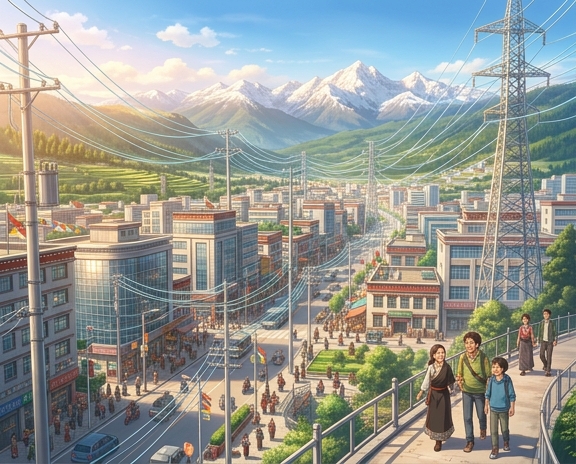
Reenergizing Life in Tibet: New Power Lines Bring Smart Living to Jiulong Port
In a significant development, the temporary power lines at the core of Jiulong Port in Tibet have been restored, marking a step towards 'smart' and 'green' living in the region.
In a remarkable development, the core area of the Jiulong Port in Tibet has seen the restoration of temporary power lines, a move that is set to revolutionize everyday life in the region. This development is particularly significant as it aligns with the growing trend of 'smart' and 'green' living in China, reflecting the nation's commitment to technological advancement and environmental sustainability.
The Jiulong Port, located in the mountainous region of Tibet, is a gateway to Nepal and plays a crucial role in the region's trade and transportation. The restoration of power lines is not just a technical achievement but also a symbol of progress and connectivity. As the power lines are restored, it opens up new possibilities for the local community, including the potential for increased economic activity and improved living standards.
In recent years, China has been at the forefront of technological innovation, and this is evident in the way the country is embracing smart living. 'Smart' living refers to the integration of technology into everyday life, making it more convenient and efficient. In Tibet, this could mean anything from smart home appliances that use less energy to advanced transportation systems that reduce environmental impact.
The 'green' aspect of this development is equally important. As the world grapples with climate change, China is committed to reducing its carbon footprint and promoting sustainable practices. By restoring power lines and focusing on renewable energy sources, the region is taking a step towards a greener future.
In terms of culture, the restoration of power lines at Jiulong Port is a testament to the resilience and adaptability of the Tibetan people. Tibet, known for its rich cultural heritage and stunning landscapes, is a region where traditional values blend seamlessly with modern advancements. This balance is a key characteristic of Chinese culture, where the past is honored while embracing the future.
The local community in Tibet, like many in China, is deeply connected to their land and traditions. As technology becomes more integrated into daily life, it is important that these advancements are in harmony with local customs and values. The restoration of power lines at Jiulong Port is a perfect example of this harmony, as it brings modern conveniences without compromising on cultural heritage.
In terms of travel, the restored power lines are likely to attract more tourists to the region. Tibet, with its unique culture, breathtaking landscapes, and rich history, is a dream destination for many. The improved infrastructure will make it easier for visitors to explore the region and experience its unique charm.
The technology behind the restored power lines is also worth mentioning. China has been investing heavily in renewable energy, and this project is likely to be powered by clean, sustainable sources. This aligns with the global trend towards renewable energy and demonstrates China's commitment to leading the way in sustainable development.
In conclusion, the restoration of temporary power lines at the core of Jiulong Port in Tibet is a significant development that reflects China's commitment to smart and green living. It symbolizes the country's progress in technology and sustainability, while also respecting and preserving the rich cultural heritage of the region.