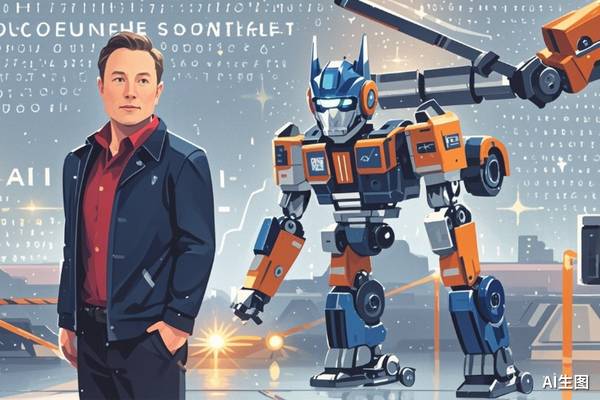
Elon Musk's Bold Predictions: AI's Future and China's Economic Growth
In a recent interview, Elon Musk predicts a 10x growth in global GDP over the next decade and warns of AI's potential to marginalize humans. Explore how this could impact everyday life in China.
In a recent interview with 36氪, Elon Musk, the renowned entrepreneur behind companies like Tesla and SpaceX, made some bold predictions about the future. He forecasted that, provided there is no third world war, the global GDP could grow by a staggering 10 times over the next 10 years. However, he also warned that in the face of advancing artificial intelligence (AI), humans may eventually be marginalized. This article delves into how these predictions could shape everyday life in China, focusing on various aspects such as technology, education, and culture.
**Technology and AI in China**
China has been at the forefront of technological advancements, particularly in the field of AI. With companies like Baidu, Alibaba, and Tencent leading the charge, the nation is already witnessing the integration of AI in various aspects of life. Musk's prediction of AI potentially marginalizing humans resonates with the current trend in China, where AI is increasingly being used in sectors like healthcare, finance, and even in daily tasks like shopping and transportation. For instance, facial recognition technology is widely used in cities like Beijing and Shanghai for everything from unlocking smartphones to managing public transportation systems.
**Education and Workforce Development**
The rapid growth in GDP, as predicted by Musk, could significantly impact China's education system. There is a growing emphasis on STEM (Science, Technology, Engineering, and Mathematics) education to prepare the workforce for the AI-driven future. This is evident in the increasing number of students pursuing degrees in these fields. The Chinese government has also been investing heavily in research and development, aiming to become a global leader in AI and technology.
**City Life and Urbanization**
With the potential economic boom, cities like Shanghai and Beijing are likely to see further urbanization and technological advancements. The bustling city life in these metropolises is already characterized by a blend of traditional Chinese culture and modern technology. For example, the famous Shanghai skyline, with its iconic Oriental Pearl Tower, is complemented by cutting-edge skyscrapers and futuristic transportation systems like the Maglev train.
**Cultural Impact**
While the economic and technological growth is significant, it is important to note the cultural impact as well. China's rich cultural heritage, including its traditions, festivals, and culinary delights, remains a cornerstone of its identity. The integration of AI and technology does not necessarily mean a loss of cultural roots. In fact, it can lead to the preservation and promotion of cultural heritage through digital means. For instance, virtual reality (VR) technology is being used to provide immersive experiences of traditional Chinese art and history.
**Shopping and Consumerism**
The economic growth predicted by Musk could also lead to a surge in consumerism in China. The country is already the world's second-largest consumer market, with a growing middle class that is eager to spend on luxury goods, technology, and travel. Online shopping platforms like Alibaba's Taobao and JD.com have revolutionized the retail landscape, offering a vast array of products at competitive prices.
**Transportation and Mobility**
The transportation sector in China is also set to undergo significant changes. With the rise of electric vehicles (EVs) and autonomous driving technology, cities are likely to see cleaner and more efficient transportation systems. Companies like NIO and Xpeng are leading the charge in the EV market, offering sleek and innovative vehicles that are popular among tech-savvy consumers.
In conclusion, Elon Musk's predictions of a 10x growth in global GDP and the potential marginalization of humans due to AI present a complex future for China. While the economic and technological advancements are promising, it is crucial to balance these with the preservation of cultural heritage and the well-being of its citizens.