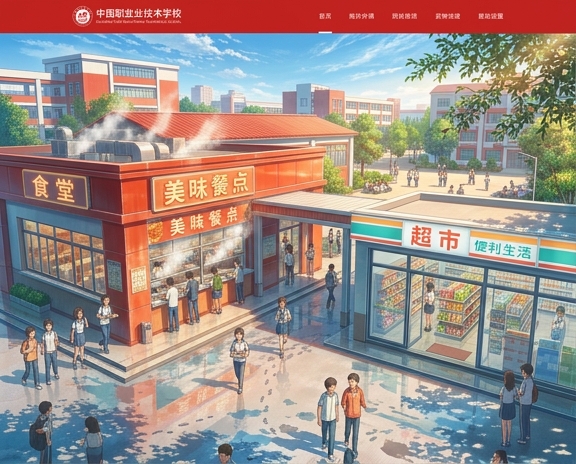
Conflict at Chinese Vocational School Over Restaurant and Supermarket
A conflict arises at a vocational school in Ruoyang, Henan, as a school official faces accusations of operating a restaurant and supermarket on campus, sparking a debate over educational ethics and local culture.
In the bustling city of Ruoyang, Henan Province, China, a recent controversy has sparked discussions about the intersection of education and commerce. The story revolves around a local government official, Li Hongqiang, who was accused of running a restaurant and supermarket within a vocational school. According to reports, Li claimed that he was merely helping others by managing these establishments.
The vocational school, where the incident took place, is a place where young people from various backgrounds come together to learn practical skills. It is a microcosm of the vibrant educational landscape in China, where vocational education is gaining increasing importance. The school's focus on practical learning contrasts with the traditional academic education system, which is often seen as the primary pathway to success in the country.
Li Hongqiang's involvement in the school's commercial activities began amicably, but it soon turned sour. In May 2026, Li and another individual, Li Moumou, clashed. Li alleged that his team was forced out of the school, and consequently, students were also expelled. This situation highlights the challenges faced by educators and administrators in balancing the needs of the school and its students with the demands of commercial interests.
Li's investment in the school, which included renovations and equipment, exceeded three million yuan. Despite being forced out, Li initially decided to let the matter go. However, when his restaurant and supermarket partnership with the school, known as Kangboer School, was dissolved, the commercial operations had to cease. This led to a tense encounter when a student, Yu Moumou, came to the school restaurant to remove equipment and reportedly verbally abused Li.
The incident has sparked a debate about the role of commercial activities in educational institutions. In China, vocational schools are often seen as a stepping stone for students who may not excel in traditional academic settings. These schools provide hands-on training and practical skills that are essential for employment in various industries. However, the commercialization of these institutions raises questions about their primary focus and the potential conflicts of interest that may arise.
The conflict at the Ruoyang vocational school also reflects the broader cultural context of China, where the line between education and commerce can sometimes blur. In recent years, there has been a growing trend of private enterprises investing in educational institutions, leading to concerns about the impact on the quality of education and the integrity of the educational system.
The story of Li Hongqiang and the vocational school in Ruoyang serves as a cautionary tale, reminding us of the importance of maintaining a clear distinction between educational and commercial activities. As China continues to evolve, it is crucial to ensure that vocational schools remain true to their educational mission, providing students with the skills and knowledge they need to succeed in the modern world.