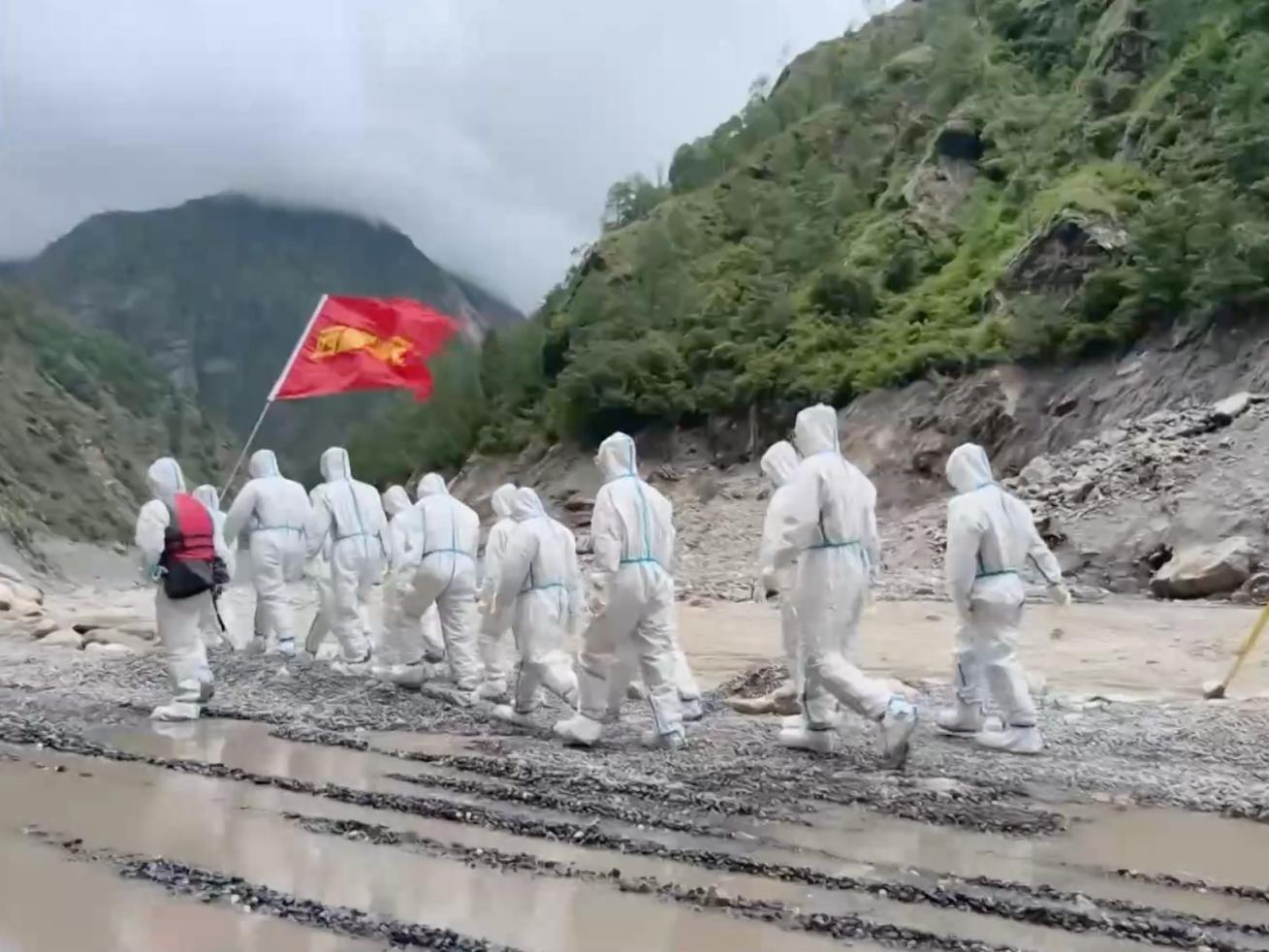
Chinese Troops Aid in Relief Efforts at Jilong Port After Disaster
After roads to Jilong Port were cleared, Chinese military units have entered the disaster zone to conduct search and sanitation operations, highlighting the country's commitment to community safety.
In a remarkable display of solidarity and resilience, the Chinese military has deployed multiple units to the disaster-stricken core area of Jilong Port, a vital gateway connecting the town of Jilong to the wider world. The operation, which commenced on the afternoon of September 2nd, follows the successful restoration of the land-based relief routes, ensuring that aid can now reach those in need more efficiently.
The decision to send military forces to the area underscores China's commitment to the safety and well-being of its citizens. In a nation where community support is deeply valued, such actions are not uncommon. The Chinese people, known for their strong sense of collectivism, often rally together in times of crisis, reflecting the cultural ethos that emphasizes the importance of community over individual gain.
As the troops ventured into the heart of the disaster zone, they engaged in a comprehensive search and rescue operation. This involved not only searching for survivors but also conducting thorough sanitation and disinfection efforts to prevent the spread of disease. The importance of such measures cannot be overstated, especially in areas where the aftermath of a disaster can lead to health crises.
In China, where cleanliness is a cornerstone of daily life, the focus on sanitation is a reflection of broader cultural values. The Chinese are known for their meticulous attention to hygiene, a trait that is deeply ingrained in their daily routines. From the bustling streets of Shanghai to the serene landscapes of Guilin, cleanliness is a priority, and the military's efforts in this regard are a testament to these values.
The operation also highlights the efficiency of China's disaster response mechanisms. The country has a well-established system for dealing with emergencies, a system that has been refined over the years through numerous drills and real-life scenarios. This efficiency is a result of the country's focus on preparedness, a cultural trait that is deeply rooted in Chinese society.
As the military units worked tirelessly to save lives and restore order, the people of Jilong and surrounding areas watched on with a mix of hope and gratitude. In a nation where traditional values are still highly regarded, the sight of uniformed soldiers working to protect and serve their fellow citizens was a powerful reminder of the strength of community bonds.
The operation at Jilong Port also serves as a microcosm of the broader Chinese approach to disaster management. The country's response to natural disasters, whether it be earthquakes, floods, or typhoons, is characterized by a coordinated effort involving various levels of government, non-governmental organizations, and the military. This collaborative approach is a reflection of the Chinese belief in collective action and unity, values that are deeply woven into the fabric of the nation's culture.
In conclusion, the deployment of military forces to the disaster-stricken core area of Jilong Port is a testament to China's commitment to the safety and well-being of its citizens. It highlights the efficiency of the country's disaster response mechanisms and the strong sense of community that binds the Chinese people together. As the operation continues, it serves as a powerful reminder of the resilience and strength of the nation in the face of adversity.