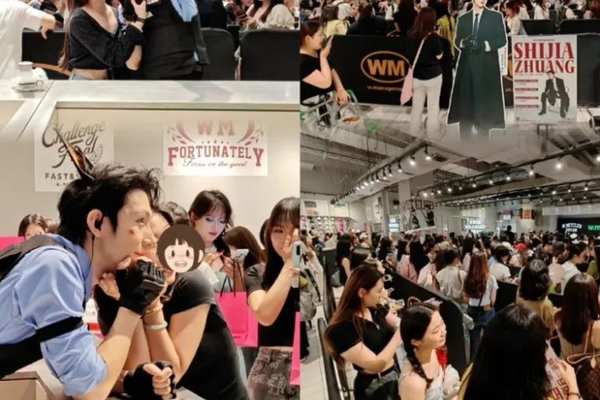
China's Young Trend: 'Daytime Manager' for a Thousand Yuan Loss
In 2025, young Chinese are embracing a new career trend: becoming 'daytime managers' in retail stores, even if it means paying for the experience. What's driving this shift?
In the bustling year of 2025, a new trend is sweeping across China's youth culture. Once a term synonymous with hardworking laborers, the role of an 'offline store clerk' has now transformed into a trendy and sought-after experience. This shift is particularly evident in the context of the ongoing 'internal struggle' and 'lying flat' phenomena among young people. The 'internal struggle' refers to the intense competition and pressure to succeed in a society where achievements are often measured by material possessions and social status. Conversely, 'lying flat' is a movement where young people opt out of the traditional career ladder and choose a more relaxed lifestyle.
The allure of becoming a 'daytime manager' for a day, even if it means paying a thousand yuan (about $150), lies in the unique experience it offers. This role allows young individuals to step into the shoes of a store manager, handling tasks such as inventory, customer service, and even marketing strategies. It's a far cry from the traditional notion of retail work, which is often seen as monotonous and low-paying.
The trend is not just about the experience; it's also a reflection of the changing aspirations of young people in China. In a country where consumer culture is rapidly evolving, the retail sector is at the forefront of this transformation. Young consumers are no longer just looking for products; they are seeking unique experiences and a sense of community.
This new trend is also a testament to the power of social media. In China, platforms like WeChat and Xiaohongshu (Little Red Book) play a crucial role in shaping trends. Young people often share their experiences and photos on these platforms, which then inspire others to try similar activities. For instance, a popular TV show in China, 'The Voice of China,' has a significant influence on music trends, with viewers often adopting the songs featured in the show.
In terms of specific cities, Shanghai and Beijing are at the forefront of this trend. Shanghai, known for its modernity and vibrancy, is a hub for innovative retail experiences. Beijing, on the other hand, is a blend of tradition and modernity, offering a unique blend of experiences for young people.
The food culture in China also plays a significant role in this trend. Young consumers are increasingly interested in unique and authentic food experiences, which are often offered by small, independent stores. These stores, often found in trendy neighborhoods, offer a personalized experience that is in stark contrast to the large, impersonal supermarkets.
In terms of technology, the rise of mobile payment platforms like Alipay and WeChat Pay has made it easier for young people to participate in these experiences. They can easily pay for the 'daytime manager' experience or make purchases at these small stores.
Education also plays a role in this trend. Young people are increasingly interested in non-traditional forms of education, such as experiential learning. The 'daytime manager' experience allows them to gain practical skills and insights into the retail industry, which can be valuable for their future careers.
Shopping in China has evolved beyond just buying products. It's now about the experience and the story behind the product. This is evident in the popularity of 'pop-up stores,' which are temporary retail spaces that offer unique and limited-edition products. These pop-up stores often feature interactive elements, such as workshops or performances, which further enhance the shopping experience.
Transportation in urban areas has also made it easier for young people to explore these new retail experiences. With the widespread use of ride-sharing apps and the development of public transportation systems, young people can easily travel to different neighborhoods and discover new stores.
In conclusion, the trend of becoming a 'daytime manager' in China is a reflection of the changing aspirations and values of young people in the country. It's a testament to the power of social media, the evolving retail landscape, and the increasing importance of experience in consumer culture.