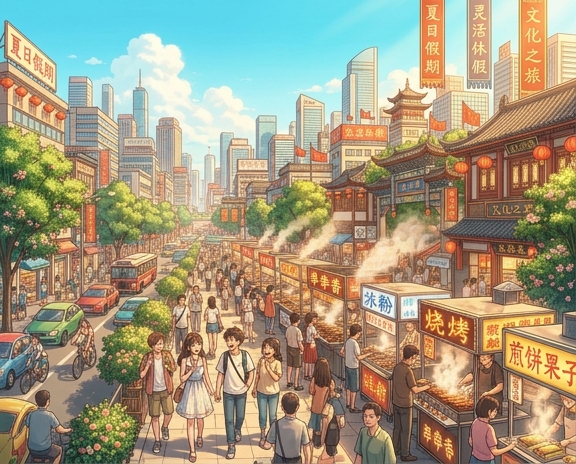
China's Summer Breaks: A Cultural Journey Through Flexible Vacations
Discover how China's workers are embracing flexible, extended summer breaks, blending cultural festivals and family time.
In China, the summer months are not just about the heat; they're a time for cultural celebration and relaxation. The recent push by multiple provinces to encourage paid leave for employees marks a significant shift in how the Chinese workforce approaches their leisure time. This initiative, as reported by Chinese news websites, is not just about giving workers a break but also about integrating these breaks with cultural events and family time.
The concept of combining paid annual leave with weekends, public holidays, and school vacations is a novel approach. This allows for the creation of a 3-7 day flexible long break, which is a welcome change for many. For instance, during the summer, when schools are on holiday, families can plan extended trips, often visiting famous historical sites or enjoying the natural beauty of places like the Great Wall or the Li River in Guilin.
One of the unique aspects of this initiative is the encouragement of a short-term vacation mode called “Friday Half-Day + Weekend + Annual Leave.” This allows employees to enjoy a longer weekend by leaving work early on a Friday, creating a perfect opportunity for a quick getaway. This is particularly popular among young professionals who are keen on exploring the vibrant food scenes in cities like Shanghai or the serene landscapes of Hangzhou.
Chinese culture is rich with festivals and traditional celebrations that are perfect for these extended breaks. The Dragon Boat Festival, for example, is a time when families gather to eat zongzi, a sticky rice dumpling filled with sweet or savory ingredients, and watch dragon boat races. Similarly, the Mid-Autumn Festival is celebrated with mooncakes and lantern festivals, offering a chance for families to come together and enjoy the full moon.
In terms of travel, the Chinese are known for their love of domestic tourism. During these long breaks, popular destinations like the Yellow Mountains (Huangshan) or the Summer Palace in Beijing see a surge in visitors. These places are not just tourist attractions but also hold cultural significance, with the Yellow Mountains being a symbol of longevity and the Summer Palace reflecting the opulence of the imperial era.
Education also plays a role in these breaks. Many parents use this time to enroll their children in summer camps or educational programs that focus on Chinese culture and history. This not only ensures that the children have a fun and enriching experience but also instills a sense of pride in their cultural heritage.
Shopping and entertainment also become a part of these extended breaks. Cities like Guangzhou and Shenzhen, known for their modern shopping malls and vibrant nightlife, become popular destinations for young people looking to unwind and enjoy the latest trends in fashion and technology.
Transportation companies also benefit from these breaks, as people travel to visit family and friends in different parts of the country. High-speed trains and domestic flights see a significant increase in usage during these periods, making it easier for people to reach their destinations quickly and comfortably.
In conclusion, China's new approach to summer breaks is not just about giving workers a break but also about encouraging them to engage with their culture, travel, and spend quality time with their families. This initiative reflects the evolving nature of Chinese society, where work-life balance and cultural heritage are increasingly valued.