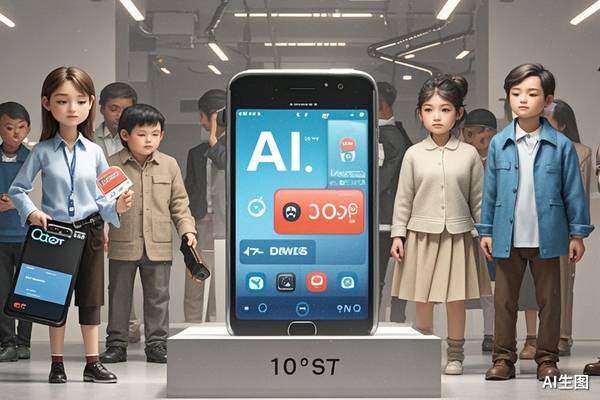
China's Smartphone Price Hike: A Look at the Impact on Everyday Life
A surge in smartphone prices in China raises questions about affordability and the role of AI in modern technology.
In March 2026, China's smartphone market experienced a significant price increase across major domestic brands like OPPO, Xiaomi, vivo, and Honor. The average price hike for mid-range models was between 300 to 800 yuan, with the once-popular 'thousand yuan' phones becoming a rarity. This sudden rise in prices, which has been described as the largest and most substantial in the past five years, has left many consumers reconsidering their plans to upgrade their devices. The primary reason for the price increase is the soaring cost of chips, with DRAM prices skyrocketing by 80% to 95%, NAND flash memory by 33% to 60%, and HBM high bandwidth memory by over 170%. The cost of storage chips in smartphones has surged from 10% to 15% of the total bill of materials (BOM) cost to over 20%, pushing some mid-to-low-end models into negative profit territory. However, the underlying cause of the chip price surge is the intense competition in the AI sector among domestic smartphone manufacturers. These companies have been investing heavily in research and development and chip procurement for AI, and the costs are ultimately passed on to consumers through higher prices.
Consider the case of Wu Fei, a regular smartphone user who enjoys playing mobile games on his phone during his commute. His experience has turned from entertainment to frustration as his phone's performance has degraded due to a battery health drop below 75%. Wu Fei's concerns are not uncommon. Many users find that the advanced AI features on their phones, such as AI photo editing or AI assistants, are unnecessary for their daily needs. In Chengdu, Yang Nan, a long-time digital product retailer, has observed that many young graduates are reconsidering their purchase plans due to the high price tags and redundant AI features. These consumers are either delaying their purchases, waiting for price drops, or opting for second-hand phones.
The current situation reflects a broader trend in the smartphone market, where the pursuit of AI capabilities has become a key driver for domestic manufacturers to break through growth bottlenecks. This has led to a surge in chip demand and subsequent price hikes. In a market where smartphone sales are reaching their peak and competition is intensifying, AI has emerged as a 'life-saving straw' for domestic brands.
The rise in smartphone prices in China is not just a matter of economic impact; it also reflects the broader cultural shift towards technology and the increasing importance of AI in everyday life. For many Chinese consumers, smartphones are not just a communication tool but also a gateway to entertainment, information, and social interaction. The debate over smartphone pricing and AI features is, therefore, not just a technological issue but also a cultural one, reflecting the changing values and priorities of modern Chinese society.