China's Push for Green Living: Embracing Eco-Friendly Products and Practices
China's seven departments unveil 20 measures to boost consumption, focusing on green living with eco-friendly products and sustainable practices.
In a move to enhance the quality of everyday life, China's Ministry of Commerce and six other departments have jointly announced 20 specific measures to expand and upgrade consumer goods. Among these, a significant emphasis is placed on promoting green consumption, reflecting a growing awareness of environmental sustainability and health consciousness among Chinese consumers.
Green living is becoming a popular trend in China, as the country seeks to balance economic growth with ecological conservation. The initiative includes the promotion of新能源汽车 (new energy vehicles), 节能家电 (energy-saving household appliances), 节水器具 (water-saving devices), 绿色建材 (green building materials), 绿色食品 (green food), and other low-carbon products. These products not only contribute to a healthier lifestyle but also support the country's goal of reducing carbon emissions.
For instance, the new energy vehicles, which are gaining popularity in China, are seen as a symbol of modernity and environmental responsibility. They are often associated with the concept of 'green driving', which resonates with the younger generation and is comparable to the 'electric vehicle' movement in Western countries. The promotion of energy-saving appliances like LED lights and smart thermostats reflects a shift towards energy efficiency and convenience.
In terms of food, the emphasis on green food is a significant aspect of this initiative. Green food in China refers to agricultural products that are grown without the use of chemical fertilizers or pesticides, making them safer and healthier for consumption. This is akin to the 'organic food' movement in the West, where consumers are increasingly seeking out food that is free from synthetic additives.
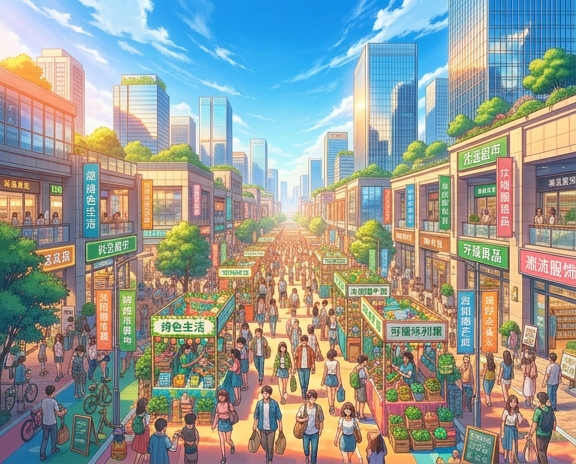
The initiative also aims to foster green markets and restaurants, which are becoming popular destinations for environmentally conscious consumers. These green establishments prioritize sustainable sourcing and waste reduction, offering a unique dining experience that aligns with eco-friendly values. This trend is reminiscent of the rise of 'farm-to-table' restaurants in Western countries, which emphasize the importance of local produce and sustainable practices.
Moreover, the initiative seeks to create green supply chains and improve the certification and labeling of green products. This ensures that consumers can easily identify and choose eco-friendly options. In China, the concept of 'green labeling' has gained traction, much like the 'fair trade' certification in the West, which guarantees that products are produced under fair labor conditions.
The promotion of green living is also reflected in urban planning and city life. Chinese cities are increasingly incorporating green spaces, such as parks and urban gardens, to enhance the quality of life for their residents. This is similar to the 'green city' movement in Western countries, which focuses on creating sustainable and livable urban environments.
In conclusion, China's push for green living through the promotion of eco-friendly products and sustainable practices is a significant step towards a healthier and more sustainable future. As these initiatives gain traction, they are likely to influence consumer behavior and contribute to a more environmentally conscious society, both in China and around the world.