China's Education Scene: Summer School Scandals and Typhoon Preparations
In China, a high school faces scrutiny for summer school practices, while regions brace for a typhoon.
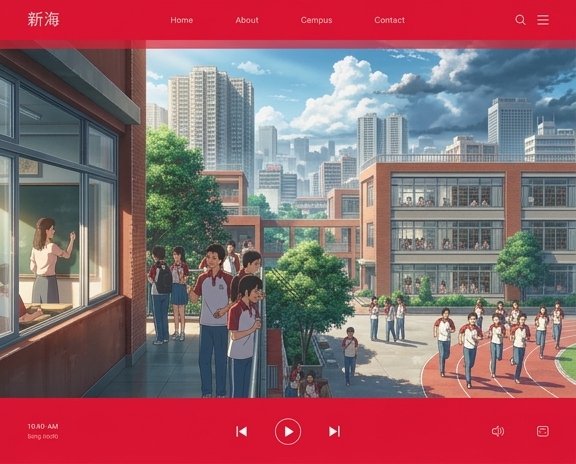
In recent news from China, a high school in Heze City, Shandong Province, has come under fire for its summer school practices. The school, Heze Dida No. 1 High School, organized a 'study tour' that was actually a 30-day closed-door tutoring session at Luoming Academy in Jining City. The school charged approximately 4,000 yuan per student for this program, which was deemed illegal. This incident highlights the ongoing debate over the ethics of summer school programs in China, where some schools are accused of using these programs as a way to profit from students' parents' willingness to pay for extra education. The practice of summer schools in China is often seen as a way for students to get a head start on their studies or to catch up, but it has also been criticized for exacerbating educational inequality and placing undue pressure on students. [Annotate: 'study tour' is a common term in China for summer school programs, which are often more intensive and focused on academic learning than traditional summer camps.]
In another part of the country, Jiangsu Province is preparing for the approach of Typhoon 'Baihaidou'. This typhoon, known for its strong winds and heavy rainfall, has prompted authorities to take precautions. In cities like Suzhou and Nanjing, residents are being advised to stock up on essential supplies and to stay indoors during the storm. The government has also issued evacuation orders for low-lying areas and has mobilized emergency response teams to ensure public safety. This preparation for the typhoon reflects the importance of community safety and the efficiency of China's disaster response system. [Annotate: Typhoon 'Baihaidou' is a name given to the storm by the China Meteorological Administration, which assigns names to typhoons to help with public awareness and preparedness.]
These events in China reflect the diverse and complex nature of everyday life in the country. While educational practices are under the microscope, natural disasters continue to be a concern. The response to these challenges showcases the resilience and adaptability of Chinese society. As summer approaches, parents and students alike are grappling with the question of how to balance academic advancement with the need for a well-deserved break. Meanwhile, the approach of a typhoon serves as a reminder of the importance of preparedness and community cooperation in the face of natural disasters. [Annotate: The Chinese approach to summer school and typhoon preparedness reflects a broader cultural emphasis on education and community welfare.]