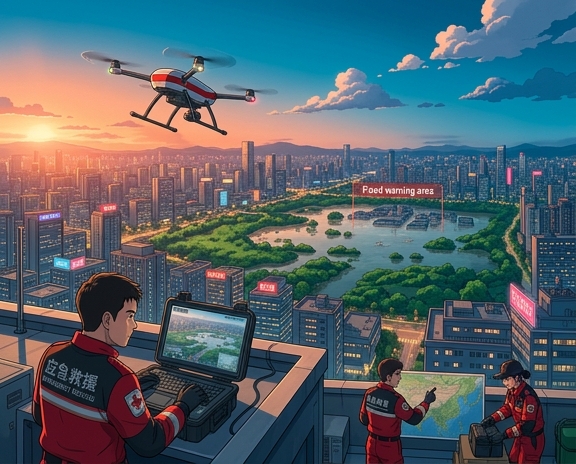
China's Rescue Teams Use Drones to Monitor Severe Flood Risk
Rescue teams in China are using advanced technology, including drones, to monitor a dangerous flood situation at the Jilong Port border. This innovative approach highlights the blend of tradition and modernity in everyday life.
In a remarkable display of China's commitment to safety and technological advancement, rescue teams have been deploying drones to monitor the堰塞湖 (yàn sè hú) – a blocked-up river caused by landslides or debris – at the Jilong Port, a strategic border crossing between China and Nepal. This proactive measure is part of the ongoing efforts to ensure public safety in the region, which has been experiencing severe flooding.
The use of drones in such critical situations is not just a testament to China's technological prowess but also reflects the country's integration of modern technology with traditional methods of disaster management. Drones, or无人机 (wú jīng chē), are being used to provide real-time imagery and data, allowing the rescue teams to assess the situation more accurately and efficiently. This is particularly crucial in the challenging terrain of the border region, where traditional monitoring methods might be limited.
Jilong Port, located in the Tibet Autonomous Region, is a significant point of interest for travelers and adventure enthusiasts. The region is known for its breathtaking landscapes, including the majestic Himalayas, and is a popular destination for trekking and mountaineering. However, the recent flooding has raised concerns about the safety of both the local population and tourists.
The drones being used are part of a growing trend in China where technology is being increasingly integrated into various aspects of daily life. From agriculture to urban planning, drones are becoming a common sight, showcasing China's rapid technological development. This is a stark contrast to the traditional image of China as a country steeped in history and culture.
In terms of education, the use of drones in disaster management is also an opportunity for students to learn about real-world applications of technology. It encourages a new generation of innovators and problem-solvers, who are being prepared to tackle the challenges of the future.
While technology plays a significant role in modern China, it is important to remember that the country's cultural heritage is deeply intertwined with its daily life. The traditional Chinese approach to community and family values remains a cornerstone of society. This is evident in the way the rescue efforts are being carried out, with a strong emphasis on collective safety and support.
In terms of entertainment, the use of drones in monitoring the flood situation has also sparked interest among the general public. Social media platforms have been abuzz with discussions about the technology and its potential applications in other areas. This highlights the role of technology in shaping popular culture and public discourse in China.
In conclusion, the use of drones in monitoring the堰塞湖 at Jilong Port is a prime example of how China is blending its rich cultural heritage with modern technological advancements. It underscores the country's commitment to safety, innovation, and community well-being, providing a glimpse into the everyday life of a nation that is both traditional and cutting-edge.